Simon Eye is growing! Now welcoming patients at our Kennett Square, PA location!
Simon Eye is growing! Now welcoming patients at our Kennett Square, PA location!
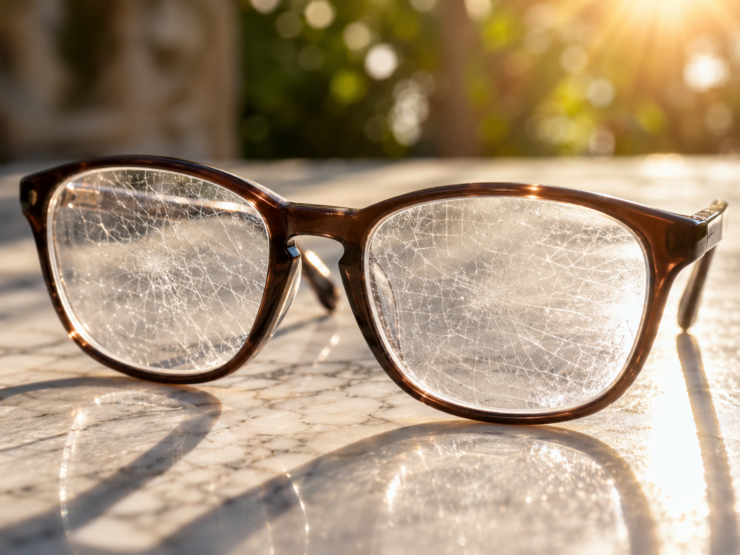
Most people know the sun’s UV rays can harm their eyes, but did you know excessive heat can also damage your glasses? If you’ve ever noticed a spider web-like pattern on your eyeglass lenses, it may not be scratches at all. In many cases, it’s a condition called lens crazing.
While it may look like your lenses are cracked, the damage is often limited to the protective coating rather than the lens itself. Understanding what causes lens crazing can help you protect your eyewear and extend the life of your glasses.
What Is Lens Crazing?
Lens crazing is the appearance of fine, web-like cracks in the anti-reflective (AR) or protective coating on your eyeglass lenses. These tiny cracks can develop when excessive heat or sudden temperature changes cause the protective coating to expand and contract differently than the lens beneath it.
Although lens crazing doesn’t affect the structural integrity of the lens, it can reduce visual clarity by creating glare, haze, or distortion.
What Causes Lens Crazing?
Everyday situations can expose your glasses to temperatures that damage the lens coatings.
One of the most common causes is extreme heat. Leaving your glasses on a car dashboard, near a grill, campfire, or stove, or in direct sunlight for extended periods can damage the protective coating.
Even everyday temperature changes can contribute over time. Moving quickly between an air-conditioned building and hot summer weather may place stress on your lenses, increasing the likelihood of crazing.
Using household cleaners that contain alcohol, ammonia, or other harsh chemicals can also break down protective lens coatings. To help preserve your lenses, always clean them with products specifically designed for eyewear.
How to Prevent Lens Crazing
Fortunately, a few simple habits can help protect your eyewear and keep your lenses looking their best.
When you’re not wearing your glasses, store them in a hard protective case to help prevent scratches and shield them from unnecessary heat exposure.
Never leave your glasses in a parked car, where temperatures can quickly become hot enough to damage lens coatings.
When it’s time to clean your lenses, use a microfiber cloth and a lens cleaner specifically designed for eyewear. If your lenses are dusty, rinse them with lukewarm water before wiping to help prevent scratches. Avoid paper towels, tissues, and household cleaning products, as they can scratch your lenses and damage the protective coating.
Can Lens Crazing Be Fixed?
Unfortunately, once lens crazing occurs, the damaged coating cannot be repaired. In most cases, the lenses will need to be replaced.
If your glasses are relatively new, it’s worth checking whether they’re covered under the manufacturer’s warranty. Some lens warranties may cover coating defects or certain types of damage, depending on the lens brand and the circumstances.
If you’re unsure whether your lenses are crazed or simply scratched, visit your eye care provider. They can inspect your eyewear and recommend the best solution.
Protect Your Vision and Your Investment
Quality eyeglass lenses are designed to provide clear, comfortable vision, but they still require proper care. By avoiding excessive heat, using the right cleaning products, and storing your glasses safely, you can help your lenses last longer and perform their best.
If you think your lenses have developed crazing or you have questions about caring for your eyewear, Simon Eye is happy to help. We’ll examine your lenses, answer your questions, and recommend the best solution to keep you seeing clearly.